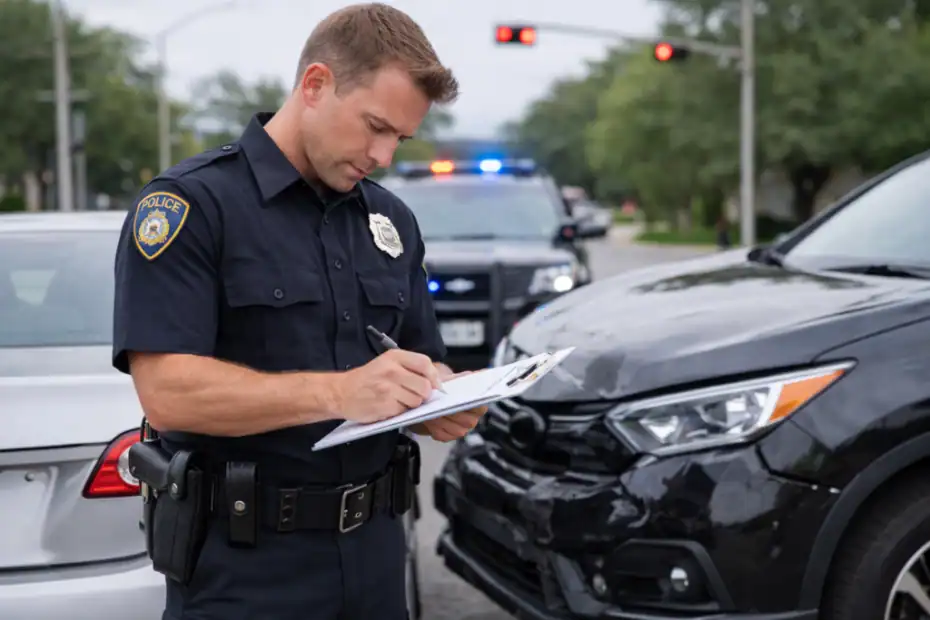
After a car crash, you should rightly be focused on treating your injuries rather than reviewing paperwork. However, the car accident police report filed by law enforcement can influence the outcome of your insurance claim or lawsuit. Inaccuracies in a police report could be anything from simple factual mistakes to disputed statements about fault.
Georgia drivers should know how to identify and correct these errors in order to protect their legal rights and financial recovery in Georgia.
Why Inaccurate Police Reports Matter in Georgia
In Georgia, police officers must complete a crash report whenever a motor vehicle accident causes at least $500 in property damage or any bodily injury. Every insurance company relies heavily on these reports when evaluating claims.
Georgia follows a modified comparative negligence rule. If you are found to be 50 percent or more at fault for an accident, you cannot recover any compensation. Even if you are assessed with less than 50 percent fault, your compensation will be reduced by your percentage of responsibility. This means that an error in the police report which incorrectly assigns fault could mean the difference between full compensation and a reduced amount or nothing at all.
Common Errors Found in Police Reports
Each police officer who responds to accidents is under pressure and must document numerous details quickly. Despite their training, mistakes still happen. Here are a few of the most common types of errors:
Factual errors are objective mistakes such as incorrect vehicle information, wrong license plate numbers, inaccurate driver’s license numbers, or errors in the date, time, or location of the accident. These can usually be verified through documentation.
Transcription errors occur when officers misrecord statements made at the scene, such as documenting that you said the other driver was going 30 mph when you actually said 45 mph.
Errors of omission happen when important facts are left out entirely, such as failing to document injuries you told the officer at the scene.
Disputed subjective information involves witness statements, fault determinations, or conclusions about traffic violations that you disagree with. These are more challenging to correct because they involve interpretation rather than verifiable facts.
Addressing errors in your car accident police report requires a methodical approach. The following steps can help you pursue corrections or amendments.
Obtain and Review the Police Report Carefully
After your accident, request a copy of your crash report using the agency case number assigned by the responding officer. Review the original report thoroughly for any inaccuracies in the basic facts, your statements, injury descriptions, and conclusions about fault or contributing factors.
Gather Supporting Evidence
You need evidence to support your request for changes. Gather photographs from the accident scene, dashcam or surveillance footage, witness statements, electronic data from vehicles, and documentation such as your driver’s license or registration to verify corrections.
Contact the Investigating Officer or Police Department
The officer who created the report can typically make amendments. Their name and contact information are listed in the report. Reach out through the police department’s non-emergency number and explain the discrepancies politely.
Request a Formal Amendment or Supplemental Report
When you meet with the investigating officer, provide your evidence and explain why the information is incorrect. For factual errors, the officer can make direct corrections. For transcription errors or omissions, the officer may amend the report if you can refresh their memory.
Submit a Statement of Disagreement if Necessary
For disputed subjective information, the officer may be unwilling to remove witness statements or fault conclusions from the report. However, you can request that your version of events be documented in a supplemental report.
If the officer refuses, submit a written statement of disagreement. Write a clear, fact-based account addressing specific errors or disputed points, and request that it be attached to the official accident report.
Follow Up and Escalate if Needed
After requesting changes, follow up with the officer or police department to confirm that amendments or supplemental reports have been completed. If you encounter resistance or delays, you may need to escalate your request to a supervisor.
Work With an Atlanta Car Accident Attorney
Correcting a police report is complicated, especially when recovering from injuries. An experienced attorney can handle communications with law enforcement, gather additional evidence, file reports properly, and preserve vital information.
Can You Take Legal Action Because of an Incorrect Police Report?
A police report is influential, but it’s not the final word on fault or liability. Even an official report including subjective statements does not make them facts. You can challenge opinions or recollections about the accident during the insurance claim process or in court.
Other forms of evidence can support your accident claim even if the police report contains disputed statements. Medical records, photographs, vehicle damage patterns, electronic data, and witness testimony can all help establish what actually occurred.
Preventing Police Report Errors Before They Happen
While you can’t control everything an officer writes in a report, you can take steps at the accident scene to reduce the likelihood of errors. If you are able to do so safely, take photographs of all vehicles involved, the surrounding area, traffic signals, and road conditions. Provide clear and accurate information to the responding officer, including precise details about what happened and any injuries you are experiencing.
If there are witnesses to the accident, ask for their contact information and request that they speak with the officer. Request the officer’s name, badge number, and agency case number so you can obtain a copy of the report as soon as it is available.
Get Qualified Assistance from a Car Accident Lawyer
Errors in your car accident police report can have serious consequences for your injury claim. Taking prompt action to address inaccuracies helps protect your right to fair compensation.
An Atlanta car accident lawyer understands how critical accurate documentation is to building a strong case. An experienced attorney can help you handle the process of correcting police reports, gather supporting evidence, and pursue the full compensation you deserve.